For many Australian small and medium businesses, social media isn’t just a marketing channel anymore. It’s customer service, brand trust, advertising, and sometimes the main way people find you in the first place.
That’s exactly why scammers are paying attention.
Over the past few years, social media scams and business account takeovers have increased sharply across Australia, with Facebook, Instagram and LinkedIn among the most common targets. And while it’s easy to assume these attacks only hit “big brands” or businesses doing large ad spends, the reality is much closer to home.
Small businesses are often targeted precisely because security controls are lighter, access is shared, and social media sits just outside the traditional “IT security” mindset.
What Are Social Media Scams?

Social media scams are attempts to trick people or businesses through platforms like Facebook, Instagram, LinkedIn, TikTok or X. They typically aim to steal login details, money, or both.
According to Scamwatch, Australians lost over $60 million to social media scams in 2025, making social media the most common way scammers contacted victims that year.
For businesses, scams often look like:
- Messages claiming to be from “Meta Business Support”
- Alerts about copyright infringement or policy breaches
- Requests to “verify” or “secure” your business account
- Fake ad approvals or warnings about ads being disabled
- Messages impersonating a staff member or agency you already work with
The goal is simple: get someone to click a link and enter their login details.
What Is a Business Account Takeover?
A business account takeover happens when a scammer gains control of your social media account and locks you out.
Once that happens, attackers may:
- Change passwords and recovery emails
- Remove legitimate admins
- Run scam ads using your stored payment details
- Message your customers pretending to be your business
- Post fake giveaways, crypto scams or investment offers
The Australian Small Business and Family Enterprise Ombudsman (ASBFEO) reported a 127% increase in cases involving small businesses having problems with digital platforms since July 2022. Two‑thirds of these cases involved Meta platforms (Facebook and Instagram), and 75% were related to businesses trying to regain access after being hacked.
In other words: once access is lost, getting it back is often slow, frustrating, and uncertain.
Australian Examples
This isn’t a “what if” scenario — it’s already impacting Australian businesses.
Melbourne Gym Locked Out for Months
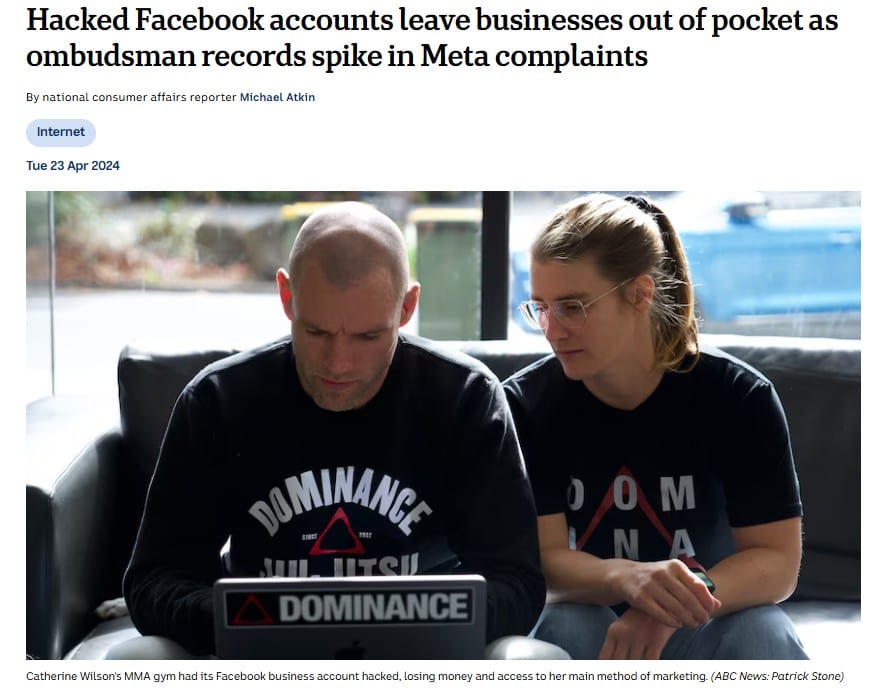
In April 2024, ABC News reported on a Melbourne MMA gym that lost access to its Facebook business account after it was hacked. Hackers ran ads using the business’s saved payment details, costing tens of thousands of dollars. The owner spent nine months trying to regain access, with limited support from Meta.
Canberra Business Caught in Account Suspension Chaos
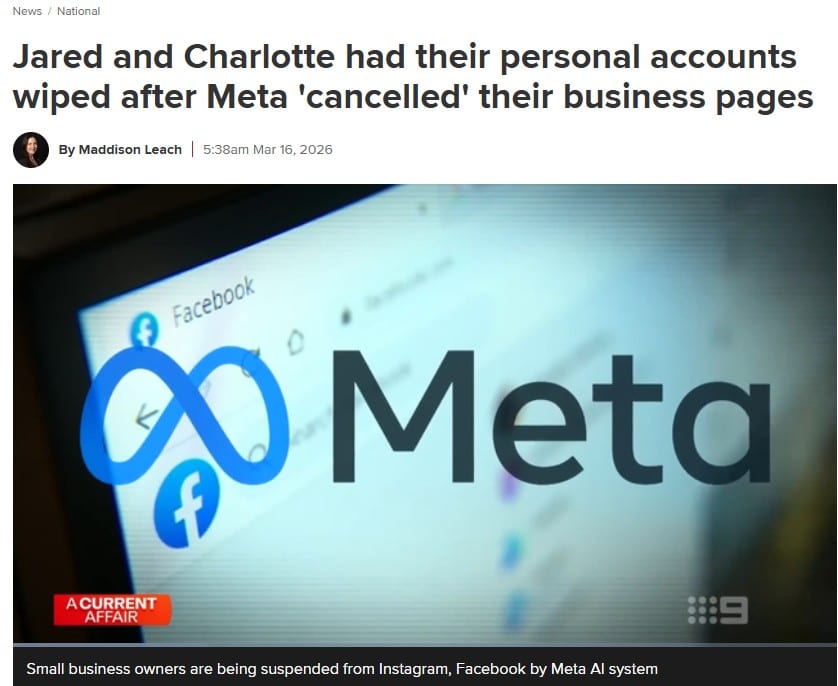
In March 2026, 9News highlighted a Canberra business owner whose Instagram business account was repeatedly suspended and reinstated before Meta disabled his personal account as well. Years of messages, photos and business communications were lost, despite paid verification services.
The common theme? Once something goes wrong, there’s very little human support available - especially for small businesses.
How Do These Account Takeovers Happen?
Most business account takeovers aren’t sophisticated hacks. They rely on everyday behaviours.
Phishing Messages
Fake messages pretending to be platform support remain the most common entry point. These messages are designed to feel urgent and official, pushing people to act quickly without checking.
Weak or Reused Passwords
If the same password is used across multiple services, attackers can use credentials leaked from unrelated data breaches to access social media accounts - a technique known as credential stuffing.
No Multi‑Factor Authentication (MFA)
The Australian Cyber Security Centre (ACSC) consistently lists MFA as one of the most effective protections for small businesses. Accounts without MFA are far easier to compromise.
Shared or Poorly Managed Admin Access
Former staff, agencies, or personal accounts with admin rights create additional entry points - especially if those accounts aren’t well secured.
Why Social Media Is So Attractive to Scammers
From a scammer’s perspective, business social media accounts are incredibly valuable:
- They already have customer trust
- They often have saved payment methods
- They can be used to run ads or spread scams quickly
- They provide direct access to your audience
When scammers take over a business account, they don’t just steal access - they borrow your credibility.
Social Media Security Checklist
This checklist covers the basics that dramatically reduce risk and are achievable for most small businesses.
Secure Access
- Turn on multi‑factor authentication (MFA) for all social media accounts
- Enable MFA on personal accounts that manage business pages
- Secure the email address used for account recovery
Review Admin Permissions
- Remove ex‑staff and old agencies immediately
- Avoid shared logins
- Assign the minimum level of access needed
- Use platform tools like Meta Business Manager where available
Be Alert to Scam Messages
- Treat urgent warnings with caution
- Never enter passwords via links sent in DMs or emails
- Verify alerts by logging in directly to the platform
Separate Business and Personal Security
- Use strong, unique passwords everywhere, this is where a Password Manager comes in handy
- Don’t rely on “just one person” knowing the login
- Secure staff personal accounts that have admin access
Have a Recovery Plan
- Know who owns each account
- Keep records of account creation details
- Know where to report incidents (Scamwatch, ACSC)
For many Australian businesses, social media is now business critical infrastructure - even if it doesn’t feel like “IT”.
Social media scams and account takeovers are increasing, not slowing down. The good news is that most attacks succeed because of missing basics, not because businesses did something unusual or careless.
A few sensible controls, reviewed regularly, can make your business a much harder target - and scammers almost always move on to easier options.
If you’re not sure where your gaps are, or you’d like help tightening things up, getting advice early is far easier than trying to recover an account once it’s gone.